A recent LinkedIn survey revealed a startling statistic: 78% of recruiters still manually review every resume that lands in their inbox. In an era where AI can process thousands of applications in minutes, this represents one of the most significant inefficiencies in modern business operations.
The True Cost of Manual Screening
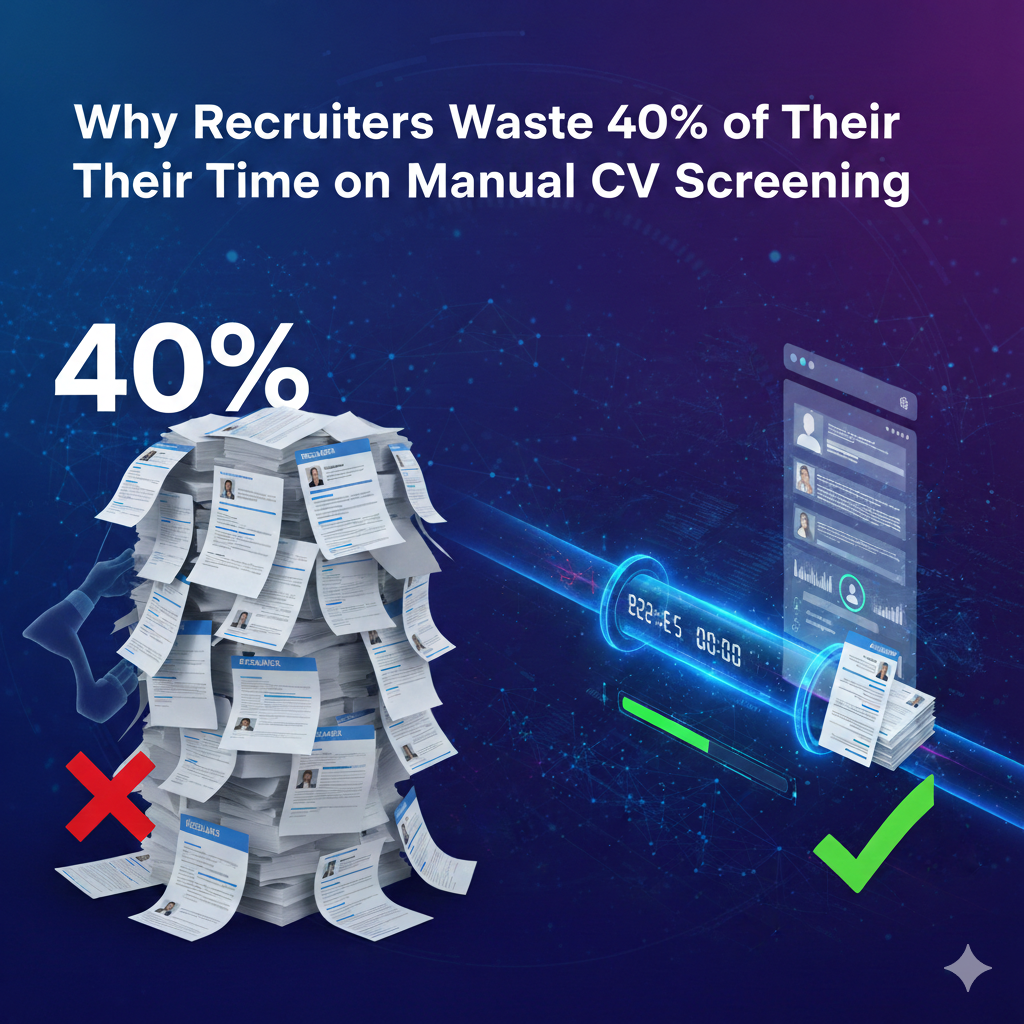
Let's break down the numbers. The average corporate job posting receives 250 applications. A recruiter spends approximately 7.4 seconds on an initial resume scan, but a thorough review takes 5-7 minutes per CV. For a company hiring 50 positions per year, that's over 1,000 hours spent just on initial screening—equivalent to half a full-time employee's annual work hours.
But time isn't the only cost. Manual screening introduces three critical problems:
- Inconsistency: Human attention varies throughout the day. Studies show candidates reviewed in the morning receive 19% more favorable evaluations than identical candidates reviewed after lunch.
- Unconscious bias: Research from Harvard Business School found that resumes with "white-sounding" names received 50% more callbacks than identical resumes with ethnic names.
- Missed talent: When rushing through hundreds of applications, recruiters inevitably overlook qualified candidates whose resumes don't match expected formats.
Why Recruiters Resist Automation
If the benefits of automated CV screening are so clear, why do most recruiters still do it manually? Our research identified three primary barriers:
1. Fear of missing the "perfect" candidate: Many recruiters believe they have an intuitive ability to spot talent that AI would miss. However, data shows the opposite—AI consistently identifies qualified candidates that human reviewers overlooked.
2. Past experiences with poor parsing tools: Early CV parsing technology was frustratingly inaccurate, often misreading dates, confusing job titles, or failing on non-standard resume formats. Modern AI-powered parsers have solved these problems, achieving 95%+ accuracy across all document formats.
3. Lack of trust in AI decisions: Recruiters worry about explaining to hiring managers why they didn't interview a candidate that AI filtered out. The solution is transparency—modern systems show exactly why each candidate was scored as they were.
The Modern Approach: AI-Assisted Screening
The goal isn't to remove humans from the hiring process—it's to let them focus on what they do best. AI handles the repetitive task of extracting information from thousands of resumes, normalizing data, and ranking candidates against job requirements. Recruiters then focus their expertise on evaluating the top candidates, building relationships, and making final decisions.
Companies that have adopted this approach report:
- 90% reduction in time spent on initial screening
- 35% improvement in quality of hire (measured by 1-year retention)
- 60% faster time-to-fill for open positions
- More diverse candidate pools reaching the interview stage
Making the Transition
If your team is still manually screening resumes, the transition to AI-assisted screening doesn't have to be dramatic. Start with high-volume roles where the time savings are most significant. Let your team see the results firsthand. Most recruiters who initially resisted automation become its biggest advocates once they experience the freedom to focus on meaningful candidate interactions instead of data entry.
The question isn't whether AI will transform recruitment—it's whether your organization will lead that transformation or be left behind by competitors who move faster and hire better.